
Episode 14: Leap Years, Lost Days, and the Quest to Count Time | Dormant Knowledge Sleep Podcast
Deb explores humanity's millennia-long quest to organize time. Perfect for bedtime learning as you reflect on the passage of time and prepare to celebrate yet another trip around the sun.
Host: Deb
Duration: ~55 minutes
Release Date: December 29th, 2025
Episode Topics: Calendar systems, timekeeping history, leap years and leap seconds
Episode Summary
Journey into the surprisingly complicated world of calendars and timekeeping as we approach another arbitrary but meaningful New Year. Why does September mean "seventh month" when it's the ninth? How did ten days simply vanish in 1582? And what exactly is a leap second, and why does it crash computer systems?
In this episode of Dormant Knowledge, the educational sleep podcast for curious minds, Deb explores humanity's millennia-long quest to organize time. From the ancient Egyptians' elegantly simple 365-day calendar to the Mayans' multiple interlocking systems, from Julius Caesar's reforms to Pope Gregory's controversial correction that made citizens riot in the streets demanding their lost days back.
Discover how the Babylonians figured out the 19-year cycle that still governs the Hebrew calendar, why the Islamic New Year moves through all the seasons, and how Samoa simply decided to skip December 30, 2011. Learn about the surprisingly complex calculation that determines Easter's date each year, the Y2K bug that was more serious than many realize, and why we'll probably never adopt a 13-month calendar despite its logical advantages.
Perfect for bedtime learning as you reflect on the passage of time and prepare to celebrate yet another trip around the sun. Whether you drift off after ten minutes or stay awake through the entire journey, you'll come away with a deeper appreciation for the intricate systems humans have created to measure our existence.
What You'll Learn
• Discover why ancient calendar-makers faced an impossible mathematical problem: lunar months and solar years simply don't align, forcing every culture to make difficult compromises
• Learn the fascinating story behind September through December's "wrong" numerical names—and how they reveal the Roman calendar's chaotic evolution from 10 months to 12
• Explore Julius Caesar's dramatic calendar reform in 46 BC, including the 445-day "year of confusion" needed to reset everything, and why Roman priests had been politically manipulating time for decades
• Understand why Pope Gregory XIII's 1582 calendar reform wasn't just about precision—it was about saving Easter from drifting into winter—and why Protestant countries refused to adopt it for 170 years
• Uncover the surprisingly diverse calendar systems still in use today, from the Islamic pure lunar calendar that cycles through all seasons to Ethiopia's calendar that's currently living in 2016 or 2017
• Examine the complex rules governing leap years (divisible by 4, except centuries, unless divisible by 400) and how a misunderstanding of these rules contributed to the Y2K scare
• Investigate the modern challenge of leap seconds: why Earth's slowing rotation requires adding extra seconds to our atomic clocks, and why this causes chaos for computer systems worldwide
• Consider why calendar reform proposals—despite being more logical and regular—face insurmountable practical barriers, from religious traditions to the massive coordination required for global change
Episode Transcript
[Soft ambient music fades in]
Deb: Welcome to Dormant Knowledge. I'm your host, Deb, and this is the podcast where you'll learn something fascinating while gently drifting off to sleep. Our goal is simple: to share interesting stories and ideas in a way that's engaging enough to capture your attention, but delivered at a pace that helps your mind relax and unwind. Whether you make it to the end or drift away somewhere in the middle, you'll hopefully absorb some knowledge along the way.
We'd love to keep working on this fun little project, so you can find us at dormantknowledge.com or follow us on social media @dormantknowledge on Instagram and Facebook, or @drmnt_knowledge—that's d-r-m-n-t-underscore-knowledge—on X. You can also buy us a coffee at BuyMeACoffee.com slash DormantKnowledgePodcast if you'd like to support the show.
Tonight, as we approach the end of another year, we're exploring something we all use every single day but rarely think about: calendars. How did humans figure out how to organize time? Why do our months have such weird, inconsistent numbers of days? And what on earth is a leap second? So settle in, get comfortable, and let's begin our journey through the surprisingly complicated history of keeping track of time.
[Music fades out]
You know, when you think about it, time is kind of... well, it's relentless, isn't it? The sun rises and sets, the moon waxes and wanes, seasons change. And somewhere along the way, humans realized we needed to keep track of all this. Not just for curiosity's sake, but for survival.
Early agricultural societies, um, they needed to know when to plant crops. Religious communities needed to know when to hold ceremonies. And societies in general needed some way to coordinate with each other—you know, to say "let's meet up in three moons" or "the festival is in twelve sunrises" or whatever.
But here's the problem that every ancient culture ran into: the astronomical cycles that govern our experience of time... they don't line up nicely. At all. [soft chuckle]
The Earth takes about 365 and a quarter days to orbit the sun—that's our solar year, which gives us our seasons. But the moon takes only about 29 and a half days to go through all its phases—that's a lunar month. And if you do the math... well, twelve lunar months gives you only 354 days. That's eleven days short of a solar year.
So right from the start, ancient peoples had to make a choice. Do you follow the moon, which is easy to observe and track? Or do you follow the sun, which gives you the seasons but requires more careful observation? Or do you try to do both somehow?
Different cultures came up with fascinatingly different answers to this problem.
Let's start with one of the earliest: the ancient Egyptian calendar. The Egyptians developed a solar calendar—actually, one of the first true solar calendars in history—around 3000 BCE. And it was beautifully simple. They divided the year into twelve months of exactly thirty days each. That gave them 360 days, and then they just... added five extra days at the end of the year. They called these extra days "epagomenal" days—from the Greek word meaning "inserted"—and they were considered outside the normal calendar, sort of special feast days.
Now, you might notice the problem here. Thirty times twelve plus five equals 365 days exactly. But we know the actual solar year is about 365 and a quarter days. So the Egyptian calendar was losing a quarter day every year. Over time—over centuries—this meant their calendar slowly drifted out of sync with the seasons. After about 1,460 years, it would complete a full cycle and come back to where it started.
Did the Egyptians not notice this? Oh, they noticed. They were excellent astronomers. But they apparently decided that the simplicity of their calendar was worth the slow drift. And honestly, in a place like Egypt where the climate is pretty stable year-round and the flooding of the Nile was the main seasonal marker... it worked well enough for thousands of years.
[Sound of shifting in chair]
Meanwhile, over in Mesopotamia, the Babylonians took a completely different approach. They used a lunisolar calendar—a hybrid system that tried to follow both the moon and the sun. Their months began with the new moon, so each month was either 29 or 30 days long, tracking the actual lunar cycle.
But they also wanted their calendar to stay aligned with the seasons—with the solar year. So they had to add an extra month every few years. These were called intercalary months. And the Babylonians got really sophisticated with this. By around 500 BCE, they'd figured out that if you add seven extra months over a nineteen-year cycle, you can keep a lunar calendar almost perfectly in sync with the solar year. This is called the Metonic cycle, after the Greek astronomer Meton, though the Babylonians knew about it first.
This intercalation system—adding months when needed—that became the basis for many other calendar systems, including the Hebrew calendar still used today for religious purposes.
Now, the Mayans... [pauses] the Mayans had not one calendar, but multiple calendar systems running simultaneously. And they were incredibly precise about it.
They had the Haab, which was a 365-day solar calendar divided into eighteen months of twenty days each, plus five "unlucky" days at the end. They had the Tzolkin, which was a 260-day sacred calendar used for religious purposes—and scholars still aren't entirely sure why they chose 260 days, though it might relate to the human gestation period or agricultural cycles.
And then—this is where it gets really interesting—they had the Long Count calendar, which was their way of tracking much longer periods of time. The Long Count measured days from a creation date that, when we translate it to our calendar, corresponds to August 11, 3114 BCE. And it could count forward for thousands of years.
You might remember all that fuss about December 21, 2012, when people thought the Mayan calendar predicted the end of the world? Yeah, that was just when one of the Long Count cycles—a period called a b'ak'tun, which is 144,000 days—completed its thirteenth iteration. The Mayans didn't think the world would end. They just thought a significant cycle was completing and a new one was beginning. Like when we celebrated the year 2000. We didn't think the world would end—well, some people worried about Y2K, but that's a different story—we just thought it was a meaningful milestone.
[Yawns softly]
The Chinese calendar, which is still used today alongside the Gregorian calendar in China and many other East Asian countries, is another lunisolar system. It has twelve or thirteen months in a year, depending on whether it's a leap year. And it's organized into sixty-year cycles, with each year named after one of twelve animals—you know, the rat, ox, tiger, rabbit, and so on—combined with one of five elements. So you get years like "Year of the Water Dragon" or "Year of the Fire Monkey."
What I find interesting about the Chinese calendar is that even though China officially adopted the Gregorian calendar in 1912, the traditional Chinese calendar is still incredibly important for cultural and religious purposes. Chinese New Year, which falls on a different date each year by our calendar, is determined by the traditional lunisolar calendar—it's the new moon that falls between January 21 and February 20.
Okay, so let's talk about Rome. Because the Roman calendar... [chuckles] ...it's a mess. Or it was a mess. Multiple messes, actually, over time.
According to tradition, the original Roman calendar was created by Romulus, the legendary founder of Rome, way back in the 8th century BCE. And it had only ten months. Ten! Totaling just 304 days. March through December. The winter period—roughly January and February in our calendar—apparently just... wasn't part of the calendar. It was unnamed winter days. Like they just gave up on winter. [laughs softly]
Now, historians aren't entirely sure if this is really how it worked or if this is just a later legend to explain some quirks in the Roman calendar. But the story goes that the second king of Rome, Numa Pompilius, added two more months—Januarius and Februarius—bringing the total to twelve months and 355 days.
But here's where the names get interesting. You've probably noticed that our months have these weird numerical names that don't match their positions. September—"septem" means seven in Latin—but it's the ninth month. October—"octo" means eight—but it's the tenth month. November, "novem" meaning nine, is the eleventh. December, "decem" meaning ten, is the twelfth.
This is because in the old Roman calendar, before January and February were added—or when they were added at the end of the year—March was the first month. So September really was the seventh month, October the eighth, and so on. The names made sense back then!
When January and February were moved to the beginning of the year, which happened gradually over time, the names of the later months no longer matched their positions. But by then, the names were traditional. Can you imagine trying to rename half the months? "Sorry everyone, September is now called... Novembrus, or something, to reflect that it's the ninth month." People don't like that kind of change. So the names stayed, even though they became mathematically weird.
[Sound of papers shuffling]
The Roman Republican calendar—the calendar used during the Roman Republic before Julius Caesar's reforms—it was theoretically 355 days long, which meant it was falling behind the solar year by about ten days every year. To correct this, the Romans would occasionally insert an extra month called Mercedonius. But here's the thing: the decision of when to insert this month was made by the Pontifices, the college of priests, and they could be... influenced. Politically.
If a consul or other magistrate wanted to extend his term of office, maybe the priests would decide that year needed an intercalary month. If they wanted to shorten someone's term, maybe they'd skip the intercalation. It got so bad that by the time Julius Caesar came to power, the calendar had drifted about three months out of sync with the seasons. Harvest festivals were happening in what should have been summer, that sort of thing.
So in 46 BCE, Julius Caesar—with the help of the Alexandrian astronomer Sosigenes—reformed the entire system. The year 46 BCE itself had to be 445 days long to reset everything. Romans called it "the year of confusion." [soft laugh]
The new Julian calendar, which took effect in 45 BCE, was elegantly simple. Twelve months totaling 365 days, with an extra day added every four years. February was chosen as the month to receive this leap day, probably because it was traditionally the last month of the year in the old Roman calendar and was already considered a bit odd.
This leap year system meant the average year length was 365.25 days, which is really close to the actual solar year of about 365.2422 days. Close enough that it would take more than a century for even a single day of drift to accumulate.
The Julian calendar was used throughout Europe for over 1,600 years. It's actually still used by some Orthodox Christian churches for calculating religious holidays.
[Soft ambient music begins to fade in]
Deb: I'm going to take a quick break here. When we come back, we'll talk about why even Julius Caesar's elegant system eventually needed fixing, and the fascinating story of how Pope Gregory XIII made ten days vanish from history.
[Music plays for transition]
Deb: Welcome back to Dormant Knowledge...
[Music fades out]
So, the Julian calendar. 365.25 days on average. Pretty good! But remember, the actual solar year—the time it takes Earth to orbit the sun—is about 365.2422 days. The Julian calendar was overshooting by about eleven minutes per year.
Eleven minutes. That doesn't sound like much, does it? But eleven minutes per year adds up. After a century, you're off by about 18 hours—three quarters of a day. After four centuries, you're off by three full days. After thirteen centuries... well, you get the idea.
By the 16th century, the calendar had drifted about ten days out of sync with the seasons. This might not matter much for everyday life, but it mattered a lot to the Catholic Church. Because the date of Easter is calculated based on the spring equinox, and the spring equinox was now happening ten days earlier in the actual solar year than it was on the calendar.
Easter, you see... [pauses] ...calculating when Easter falls is surprisingly complicated. It's defined as the first Sunday after the first full moon occurring on or after the spring equinox. This definition was established at the Council of Nicaea in 325 CE, and at that time, the spring equinox was occurring on March 21.
But by the 1570s, the spring equinox was actually occurring around March 11 on the calendar. If the Church didn't fix this, eventually Easter would drift into summer, then autumn, then winter. It would lose all connection to its springtime symbolism of rebirth and renewal.
So Pope Gregory XIII convened a commission to reform the calendar. The main changes were two-fold. First, they would delete ten days from the calendar to reset the spring equinox to March 21. Second, they would refine the leap year rules to prevent future drift.
The new rule was: years divisible by four are leap years, except for years divisible by 100, which are not leap years, unless they're also divisible by 400, in which case they are leap years.
So... [speaking slowly as if working it out] 1600 was a leap year because it's divisible by 400. 1700, 1800, and 1900 were not leap years, even though they're divisible by four, because they're divisible by 100 but not by 400. But 2000 was a leap year because it's divisible by 400.
This system gives an average year length of 365.2425 days, which is much closer to the actual solar year. The drift is now only about one day every 3,236 years. Good enough!
The Gregorian calendar was officially adopted in October 1582. Pope Gregory decreed that the day after Thursday, October 4, 1582, would be Friday, October 15, 1582. Ten days just... disappeared. People went to bed on Thursday night and woke up on Friday morning, eleven days later on the calendar.
Now, you might imagine this caused some confusion. There are stories—probably apocryphal, but repeated often—of riots in the streets with people demanding "Give us back our eleven days!" The evidence for actual riots is pretty thin, though. Most people probably didn't care that much about what number the day was called, as long as they still got paid the same and their rent wasn't due any sooner.
[Soft chuckle]
But here's what's really interesting: not everyone adopted the new calendar at the same time. Catholic countries adopted it in 1582 or shortly after. But Protestant countries were suspicious of anything decreed by the Pope. Britain and its colonies—including what would become the United States—didn't adopt the Gregorian calendar until 1752. That's 170 years later!
When Britain finally made the switch, the calendar had drifted even further, so they had to delete eleven days instead of ten. September 2, 1752, was followed by September 14. And this did cause some confusion. George Washington was born on February 11, 1731, according to the calendar in use at the time. But after the calendar change, his birthday became February 22, 1732. We celebrate it on February 22, but he was born on February 11 by the calendar his parents were using.
Russia didn't adopt the Gregorian calendar until after the Russian Revolution, in 1918. Which is why the October Revolution actually happened in November by the Gregorian calendar. The Orthodox churches in Russia, Greece, and some other countries still use the Julian calendar for religious purposes, which is why Orthodox Christmas falls on January 7 by the Gregorian calendar.
The Gregorian calendar is now the international standard, used for civil purposes almost everywhere in the world. But many other calendar systems are still in use alongside it for religious or cultural purposes.
The Islamic calendar, for example, is a purely lunar calendar. Each month begins with the sighting of the new moon crescent, and months are either 29 or 30 days long. Twelve lunar months gives you a year of only 354 or 355 days—about eleven days shorter than a solar year.
This means the Islamic calendar is constantly shifting earlier relative to the seasons. The month of Ramadan, the month of fasting, cycles through all the seasons over the course of about 33 years. Sometimes it falls in summer, sometimes in winter. If you're a Muslim living near the equator, fasting during Ramadan is always about twelve to thirteen hours. But if you live in far northern latitudes, the length of the fast can vary dramatically depending on when Ramadan falls—from just a few hours in the winter to nearly twenty hours in the summer.
The Hebrew calendar is another lunisolar calendar still in use today. It's similar to the ancient Babylonian calendar in that it uses the Metonic cycle—seven leap months inserted over nineteen years to keep the lunar months aligned with the solar year. But it also has some unique features, like having both "deficient," "regular," and "complete" years, depending on whether certain months have 29 or 30 days, which is determined by complex rules designed to ensure that certain religious holidays don't fall on inconvenient days of the week.
For instance, Yom Kippur—the Day of Atonement, a day of fasting—can't fall on a Friday or Sunday, because that would mean two consecutive days without cooking, which would create hardship. So the calendar has built-in rules to prevent this.
[Yawns softly]
The Persian calendar, used in Iran and Afghanistan, is actually one of the most astronomically accurate calendars in use today. It's a solar calendar with twelve months, but the lengths of the months are determined by the sun's movement through the zodiac, and the new year begins on the spring equinox. Leap years are calculated using a complex algorithm that keeps it accurate to within one day every 110,000 years or so. Much more accurate than even the Gregorian calendar!
Ethiopia uses a calendar that's about seven to eight years behind the Gregorian calendar. By the Ethiopian calendar, it's currently around the year 2016 or 2017, depending on the time of year. This is because they calculated the date of Jesus's birth differently than the calculation used for the Gregorian calendar. Ethiopia celebrated the millennium—the year 2000 by their calendar—in 2007 or 2008 by ours.
Now, let's talk about leap years in more detail, because they're more complicated than you might think.
The basic rule you probably learned is: every four years is a leap year. But we've already covered the refinement: except years divisible by 100, unless also divisible by 400.
But even this can get confusing. The year 2000 was a leap year. Many computer programmers, when they wrote software in the 1980s and 1990s, programmed in the rule "divisible by four, except if divisible by 100." They assumed no one would still be using their software in the year 2000, or they didn't realize that 2000 was supposed to be an exception to the exception. This was part of the Y2K bug—the fear that computers would malfunction when the year changed from 1999 to 2000.
A lot of work went into fixing this problem in the years leading up to 2000. Some people thought it was all overblown panic, but actually, the reason nothing catastrophic happened was precisely because people took it seriously and fixed the bugs beforehand. Though I suppose you could argue that if nothing happened, it means we'll never know for sure how bad it could have been. [soft laugh]
There's a fun historical mistake related to leap years. When the Julian calendar was first implemented in 45 BCE, the priests who were responsible for managing the calendar misunderstood the instructions. They were supposed to add a leap day every fourth year, but they added one every third year by mistake. This went on for about 36 years, adding several extra days to the calendar.
Emperor Augustus eventually caught the error and corrected it by omitting leap days for several years to compensate. So the early Julian calendar was even messier than intended.
[Soft ambient music begins to fade in]
Deb: I'm going to take another short break here. When we come back, we'll dive into even stranger territory: leap seconds, atomic time, and why computer programmers have nightmares about time zones.
[Music plays for transition]
Deb: That music is putting me to sleep... [yawns] If you're still with us, welcome back to Dormant Knowledge...
[Music fades out]
Okay, so... leap years help us keep our calendar aligned with Earth's orbit around the sun. But there's another problem: Earth's rotation—the thing that gives us days—isn't perfectly constant either.
I mean, it's very close to constant. From our human perspective, a day is a day. Twenty-four hours. But if you measure really precisely, using atomic clocks, you'll notice that Earth's rotation is actually gradually slowing down. The length of a day is increasing by about 1.7 milliseconds per century.
This is partly due to tidal friction—the moon's gravity pulling on Earth's oceans creates tidal bulges, and the friction between the oceans and the seabed acts as a brake on Earth's rotation. Very, very gradually, over millions of years, Earth's rotation is slowing and the day is getting longer.
But there are also shorter-term variations. Earthquakes can slightly change Earth's rotation rate by redistributing mass. The massive earthquake and tsunami in Japan in 2011, for instance, slightly sped up Earth's rotation—it shortened the day by about 1.8 microseconds. That's a tiny, tiny amount, but measurable with atomic clocks.
Seasonal effects matter too. The redistribution of water—snowfall in winter, melting in spring—changes Earth's moment of inertia slightly, speeding up or slowing down rotation just a tiny bit. It's like a figure skater pulling their arms in to spin faster or extending them to slow down.
So we have atomic time, which is perfectly regular—defined by the vibrations of cesium atoms—and we have astronomical time, based on Earth's rotation, which is slightly irregular. And we want our clocks to stay synchronized with both.
This is where leap seconds come in.
A leap second is exactly what it sounds like: an extra second added to our clocks to keep atomic time synchronized with Earth's rotation. Since 1972, when the leap second system was implemented, we've added 27 leap seconds. The last one was added on December 31, 2016. At 11:59:59 PM, clocks ticked to 11:59:60 PM—a minute with 61 seconds—before rolling over to midnight.
Leap seconds are announced by the International Earth Rotation and Reference Systems Service, usually about six months in advance. They're added on either June 30 or December 31, at the end of the day.
Now, you'd think adding an extra second every year or two wouldn't be a big deal. But it causes havoc for computer systems. Modern computers, databases, and networks all rely on very precise time synchronization. Financial trading systems, GPS satellites, telecommunications networks—they all need to agree on what time it is to within tiny fractions of a second.
Adding a leap second means that time doesn't advance in a perfectly predictable way. Some systems handle it by adding a 61st second to the minute. Some systems "smear" the leap second, spreading it out over several hours so that time never appears to go backwards or pause. Some systems just ignore it and then gradually correct their clocks over the following days.
And sometimes, systems crash. In 2012, a leap second caused problems for Linux servers across the internet, including sites like Reddit and Foursquare. Planes were grounded in Australia because the booking system went down.
There's been serious discussion about abolishing leap seconds altogether. Let atomic time and astronomical time drift apart slowly, and then make larger adjustments every century or so. Or maybe never adjust at all, and just accept that noon—defined by clocks—will very slowly drift away from when the sun is highest in the sky. Over several thousand years, this drift could become noticeable, but it wouldn't affect everyday life much.
This debate is ongoing. Some countries want to abolish leap seconds for the sake of technological systems. Others, particularly the United Kingdom, want to keep them for cultural and scientific reasons—Greenwich Mean Time and the tradition of astronomical timekeeping are deeply important to British identity.
[Sound of shifting in chair]
And if you think leap seconds are weird, let me tell you about the International Date Line. This is an imaginary line in the Pacific Ocean, roughly following the 180-degree meridian, where the date changes. Cross the date line going west, and you jump ahead a day. Cross it going east, and you go back a day.
The date line isn't straight. It zigzags around to avoid dividing island nations or land masses. There's a bit where it juts way out to the east to keep all of Kiribati in the same day zone, even though Kiribati stretches across a huge swath of the Pacific.
And there's a fun story about the island of Samoa. Until 2011, Samoa was on the east side of the date line, which meant they were one of the last places on Earth to see each new day. But most of Samoa's trade was with Australia and New Zealand, on the west side of the line. Samoan businesses found it inconvenient to be a day behind their trading partners. So in December 2011, Samoa decided to switch sides. They jumped over the date line. December 29, 2011, was followed immediately by December 31, 2011. December 30 just didn't exist in Samoa that year.
The Date Line also creates some amusing situations. There are islands where you can stand on a beach and see tomorrow across the water. Or celebrate New Year's twice by sailing back and forth across the line.
Now, despite all these complications—or maybe because of them—people have proposed reforming the calendar many times over the centuries. Most of these proposals have gone nowhere, but they're interesting to think about.
The World Calendar, proposed in the early 20th century, would have had four identical quarters per year. Each quarter would have three months: one with 31 days and two with 30 days. This gives you 364 days, which divides evenly into 52 weeks. Each year would start on Sunday, January 1, and every date would fall on the same day of the week every year. January 5 would always be a Thursday, for example.
The extra day to make 365 would be "Worldsday," a holiday at the end of the year that wouldn't be part of any week or month. In leap years, there'd be a second such day. This means the calendar would be perpetual—you'd only need one calendar, and it would work for every year.
The International Fixed Calendar, proposed in the early 1900s, would have thirteen months of exactly 28 days each. Each month would have exactly four weeks. The thirteenth month would be called Sol and would come between June and July. Again, there'd be an extra year-day that's not part of any month.
The Eastman Kodak Company actually used this calendar internally for several decades. George Eastman, the founder, liked the simplicity for business planning—every month was identical, so comparing month-to-month revenues was straightforward.
The Hanke-Henry Permanent Calendar, proposed more recently, would have months of 30 and 31 days in a pattern that creates identical quarters and ensures that every date falls on the same day of the week every year. It also proposes abolishing time zones and leap years, instead using leap weeks every five or six years.
But here's the problem with all these reforms: changing the calendar is really, really hard. You'd need global agreement. You'd have to deal with religious objections—many holidays are tied to specific dates or lunar phases, and changing the calendar structure could be seen as disrespecting religious traditions. You'd have to update every computer system, every contract, every law that references dates.
And for what benefit? Our current calendar, for all its quirks and irregularities, works. Everyone knows it. It's a shared system that took centuries to develop and spread. The network effects are powerful. Even if a new calendar were logically superior, the practical barriers to adoption are enormous.
So we're probably stuck with our strange, irregular, historically layered Gregorian calendar for the foreseeable future.
You know what's interesting to me? [yawns] Sorry... what's interesting is how calendars shape our experience of time on a deep level.
The seven-day week, for instance—where does that come from? It's not astronomical. Earth doesn't rotate seven times during a lunar phase or anything like that. The seven-day week probably has religious and cultural origins—the seven visible celestial bodies in ancient astronomy (sun, moon, and five visible planets), the Biblical creation story, and Babylonian traditions. But now it's so embedded in our culture that we can't imagine organizing time any other way.
The weekend—the idea that certain days are work days and others are rest days—that's not universal across all cultures, though it's become widespread. In the early Soviet Union, they actually tried various experiments with different-length weeks—five-day weeks, six-day weeks—to improve productivity. It didn't work very well. People like their seven-day weeks.
The concept of a "new year" is completely arbitrary. There's nothing astronomical about January 1. In the old Roman calendar, March was the beginning of the year, which at least had some symbolic connection to spring and new growth. But January? It's the middle of winter in the Northern Hemisphere. Yet we've agreed to celebrate new beginnings at this arbitrary point, and it's become meaningful through that shared cultural agreement.
Different cultures celebrate new year at different times. Lunar New Year in East Asian cultures falls on the new moon between January 21 and February 20. The Islamic New Year moves through the seasons because it's based on a lunar calendar. The Persian New Year, Nowruz, falls on the spring equinox. The Jewish New Year, Rosh Hashanah, is in the fall, usually September or early October.
Each of these represents a different way of marking the cycle of time, a different moment chosen as symbolically significant for a fresh start.
[Pause]
In ancient Rome, during the late Republican period when the calendar was all messed up from political manipulation, people must have had this weird experience of time being... untrustworthy. Like, you think you know what season it is, what month it should be, but the calendar says something different. Harvest festivals happening at the wrong time of year. The summer heat arriving when the calendar says it should still be spring.
Julius Caesar's reform wasn't just administrative housekeeping. It was restoring a sense that time was ordered, predictable, trustworthy. That if the calendar said it was March, it actually was March, and spring would arrive on schedule.
We don't think about this much anymore because our calendar works well enough that we trust it implicitly. We know that if we plant seeds in April, summer will come. We know that the winter solstice will be around December 21. That trust in the calendar, in the shared measurement of time, is something we kind of take for granted.
But it was hard-won. It took centuries of observation, mathematical sophistication, and social coordination to create systems that work. And even now, we're still tweaking things with leap seconds and international time standards.
[Soft ambient music begins to fade in]
So here we are, at the end of another year by the Gregorian calendar. December 31 will tick over to January 1, and we'll all agree to call it a new year, even though Earth's orbit around the sun is a continuous, seamless process with no actual beginning or end. We'll make resolutions, reflect on the passage of time, celebrate the arbitrary but meaningful milestone.
And that's... kind of beautiful, isn't it? The way we humans impose structure and meaning onto the relentless flow of time. The way we create shared systems—flawed, complicated, historically layered—that let us coordinate our lives with each other. The way we use mathematics and astronomy and cultural traditions to try to understand our place in the cosmos, our movement through space and time.
Calendars are one of humanity's most fundamental technologies. More basic than computers or cars or agriculture even. They're how we organize our existence. How we remember the past, plan the future, and navigate the present together.
Thank you for listening to Dormant Knowledge. If you're still awake and hearing my voice, I appreciate your attention and your company on this journey through time. But if you've drifted off to sleep somewhere along the way—which was partly the goal—then sweet dreams, and I hope some knowledge about calendars has made its way into your consciousness.
Until next time, this is Deb wishing you restful nights and curious days. And happy new year, whenever your new year may fall.
[Music swells gently and fades out]
END OF EPISODE
WORD COUNT: Approximately 5,600 words
PRONUNCIATION GUIDES:
- Epagomenal: eh-pah-GOM-eh-nal
- Intercalary: in-TER-cah-lair-ee
- Metonic: meh-TON-ik
- Mercedonius: mer-seh-DOH-nee-us
- Sosigenes: so-SIJ-eh-neez
- B'ak'tun: BAHK-toon
- Nowruz: noh-ROOZ
MUSIC BREAK NOTES:
- First break: After section on Julius Caesar's reform, before Gregorian calendar (~2,000 words in)
- Second break: After leap year discussion, before leap seconds and modern timekeeping (~4,000 words in)
Show Notes & Resources
Key Historical Figures Mentioned
Julius Caesar (100 BC - 44 BC)
Roman general, statesman, and dictator who reformed the chaotic Roman Republican calendar in 46 BC. With help from Alexandrian astronomer Sosigenes, Caesar created the Julian calendar with its 365.25-day year and leap year system. Ironically, he was assassinated just two years after his calendar reform took effect, but his calendar would be used throughout Europe for over 1,600 years.
Pope Gregory XIII (1502 - 1585)
Pope from 1572 to 1585 who commissioned the reform that created our modern Gregorian calendar. Concerned that Easter was drifting away from the spring equinox due to accumulated errors in the Julian calendar, he convened a commission of astronomers and mathematicians. The resulting reform in 1582 deleted ten days from October and refined the leap year rules to prevent future drift.
Sosigenes of Alexandria (c. 1st century BC)
Greek astronomer from Alexandria whom Julius Caesar consulted for calendar reform. Though little is known about his life, Sosigenes calculated that the solar year was approximately 365.25 days and designed the leap year system that would bear Caesar's name. His work formed the foundation of European timekeeping for nearly two millennia.
George Eastman (1854 - 1932)
Founder of the Eastman Kodak Company who was so frustrated with irregular month lengths that he adopted the International Fixed Calendar (13 months of 28 days each) for internal company use. Kodak used this calendar system from 1928 until 1989, demonstrating that alternative calendars can work in practice—though getting the whole world to adopt them is another matter entirely.
Important Calendar Systems & Concepts
The Metonic Cycle
A 19-year period discovered by the Babylonians (and later by Greek astronomer Meton) in which 235 lunar months almost exactly equal 19 solar years. This cycle allows lunisolar calendars—like the Hebrew and Chinese calendars—to stay synchronized with both the moon's phases and the seasons by adding seven intercalary (extra) months during the cycle. The precision is remarkable: after 19 years, the new moon falls on nearly the same day of the solar year.
Intercalary Months and Days
Extra time periods inserted into calendars to maintain alignment with astronomical cycles. The ancient Egyptians added five "epagomenal" days at the end of their 360-day calendar. The Babylonians and Romans occasionally added entire extra months. Modern lunisolar calendars like the Hebrew calendar systematically add a 13th month seven times every 19 years. The term comes from Latin "intercalare," meaning "to insert."
The Spring Equinox and Easter Calculation
Easter's date is determined by a complex formula: it falls on the first Sunday after the first full moon occurring on or after the spring equinox (fixed at March 21 for calculation purposes). This "computus" was established at the Council of Nicaea in 325 CE and requires tracking both solar and lunar cycles. By the 16th century, accumulated errors in the Julian calendar meant the actual spring equinox was occurring around March 11, threatening to eventually push Easter into summer. This discrepancy was the primary motivation for Pope Gregory XIII's calendar reform.
Leap Seconds
Extra seconds occasionally added to Coordinated Universal Time (UTC) to account for irregularities in Earth's rotation. Unlike the predictable leap year system, leap seconds are announced only about six months in advance because Earth's rotation varies due to tidal friction, earthquakes, and seasonal mass redistribution. Since the system began in 1972, 27 leap seconds have been added (as of 2024). While necessary for keeping atomic time synchronized with astronomical time, leap seconds create significant challenges for computer systems that assume time advances at a constant, predictable rate.
The Julian Calendar vs. Gregorian Calendar
The Julian calendar, established by Julius Caesar in 45 BC, had a year length of exactly 365.25 days (365 days with one leap day every four years). This was close to the true solar year of 365.2422 days, but the 11-minute annual difference accumulated to about three days every four centuries. The Gregorian calendar refined the leap year rules (skipping leap years on century years unless divisible by 400) to achieve an average year of 365.2425 days, accurate to within one day every 3,236 years.
The International Date Line
An imaginary line running roughly along the 180° meridian in the Pacific Ocean where the calendar date changes. Cross westward and you skip ahead a day; cross eastward and you repeat a day. The line zigzags to avoid splitting island nations and territories. In 2011, Samoa switched sides of the date line to align better with trading partners, causing December 30 to simply not exist that year in Samoa—residents went straight from December 29 to December 31.
Modern Applications & Contemporary Relevance
Digital Timekeeping Challenges
Modern computing systems require microsecond precision for financial transactions, GPS navigation, telecommunications, and database synchronization. Leap seconds create significant technical challenges because they make time non-monotonic—it doesn't always move forward predictably. Major tech companies and some scientists advocate abolishing leap seconds and letting atomic time gradually diverge from astronomical time, with corrections made on much longer timescales. The debate continues at the International Telecommunication Union, balancing technological convenience against astronomical tradition.
Global Business and Multiple Calendar Systems
International companies must navigate multiple calendar systems simultaneously. Islamic banks operate on both Gregorian and Islamic calendars for different purposes. Many East Asian countries officially use the Gregorian calendar but schedule major holidays and cultural events by traditional lunisolar calendars. Software localization requires accounting for different New Year dates, weekend structures (Friday-Saturday in some Middle Eastern countries, Sunday-Monday in some places), and holiday schedules tied to various calendar systems.
Climate Change and Seasonal Drift
While calendar reforms address accumulated mathematical errors, they can't account for climate change shifting when seasons "feel" like they arrive. Agricultural calendars and traditional seasonal markers—when certain birds migrate, when specific plants bloom—are shifting earlier or later. Indigenous peoples using traditional lunar or seasonal calendars often notice these changes more acutely than those using purely mathematical solar calendars. This creates a tension between fixed calendar dates and lived environmental experience.
Y2K and Date System Vulnerabilities
The Year 2000 problem revealed how deeply calendar assumptions are embedded in computer systems. Many programs stored years as two digits to save memory, meaning 2000 would be indistinguishable from 1900. The crisis was averted through massive remediation efforts costing an estimated $300 billion globally. The experience taught valuable lessons about long-term planning in technology systems. Similar issues loom for 2038 (when 32-bit Unix time stamps will overflow) and other future date-related technical challenges.
Calendar Reform Proposals
Despite ongoing proposals for more logical calendars—like the World Calendar (identical quarters), International Fixed Calendar (13 equal months), or Hanke-Henry Permanent Calendar (same dates each year)—adoption faces enormous barriers. Religious communities depend on traditional calendars for holy days. The massive coordination required for global implementation—updating every computer system, contract, law, and cultural practice—makes change prohibitively expensive. The status quo, however imperfect, benefits from powerful network effects: everyone uses it, so everyone continues using it.
Further Learning
Books:
Marking Time: The Epic Quest to Invent the Perfect Calendar by Duncan Steel (Wiley, 2000)
A comprehensive and highly readable history of calendar development from ancient times through modern proposals for reform. Steel, an astronomer, combines technical precision with engaging storytelling, making complex topics like the Metonic cycle and computus calculations accessible to general readers.
 Follow
Calendar: Humanity's Epic Struggle to Determine a True and Accurate Year by David Ewing Duncan (Avon Books, 1998)
An excellent narrative history focusing on the dramatic human stories behind calendar reforms, particularly the Gregorian calendar adoption and the political and religious conflicts it generated. Duncan brings to life the personalities and power struggles that shaped how we measure time.
 Follow
The Calendar: The 5000-Year Struggle to Align the Clock and the Heavens by David Ewing Duncan (Fourth Estate, 1998)
Duncan explores not just Western calendar history but also Chinese, Islamic, Hebrew, Mayan, and other calendar systems, showing how different cultures approached the same astronomical problems with fascinatingly different solutions.
 Follow
Online Resources:
United States Naval Observatory - Systems of Time
The official U.S. authority on precise time provides excellent explanations of leap seconds, UTC, and the relationship between atomic and astronomical time. Includes announcements of upcoming leap seconds and technical documentation.
International Earth Rotation and Reference Systems Service (IERS)
The organization responsible for announcing leap seconds and maintaining global time standards. Their site includes bulletins, technical papers, and explanations of how Earth's rotation is measured and why it varies.
NASA - Ancient Observatories: Timeless Knowledge
Educational resources about how ancient cultures from the Mayans to Egyptians tracked celestial cycles and developed calendar systems, with beautiful images and accessible explanations suitable for general audiences.
Time and Date - Calendar Systems
Practical tools for converting between different calendar systems (Gregorian, Julian, Islamic, Hebrew, Persian) along with explanations of how each system works. Includes calculators for finding dates across systems and explanations of various calendar quirks.
Documentaries & Media:
Ancient Discoveries: Machines of the Gods (History Channel, 2009)
Includes excellent segments on ancient astronomical observations and calendar systems, particularly the Antikythera mechanism—an ancient Greek device that calculated astronomical positions and eclipses.


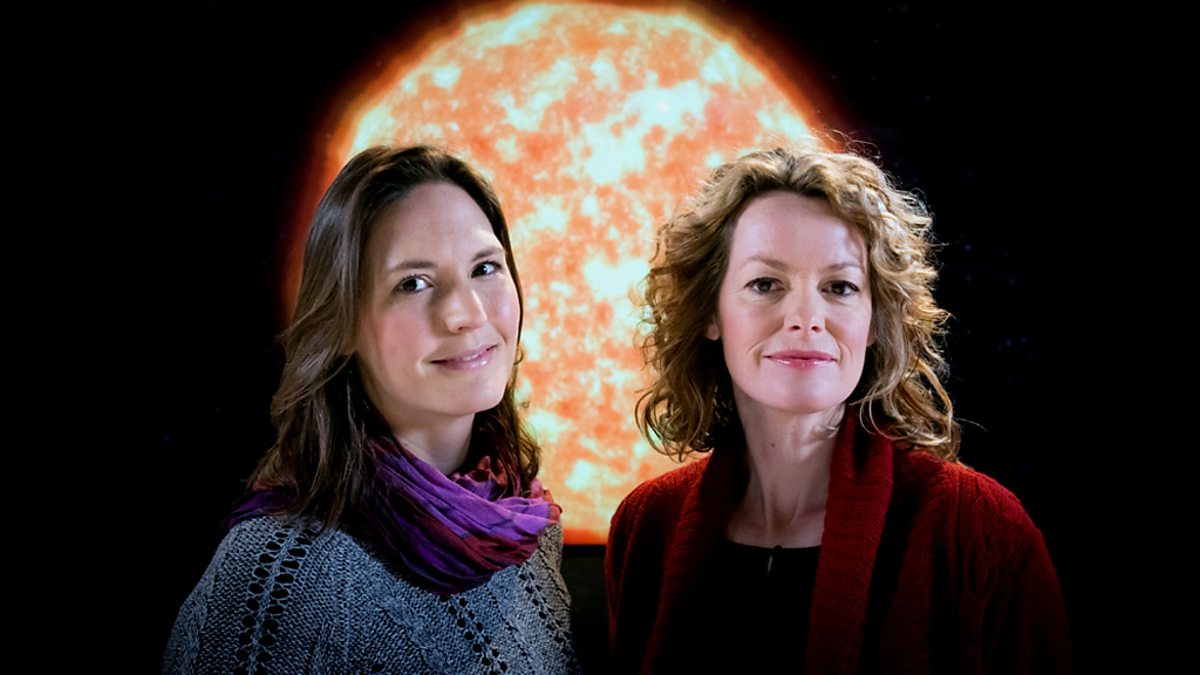
The Secret Life of the Sun (BBC, 2013)
While focused on solar physics, includes fascinating material on how human societies have tracked the sun's movements and developed calendars around solar cycles.
Episode Tags
#CalendarHistory #Timekeeping #SleepPodcast #EducationalContent #AncientHistory #RomanHistory #JuliusCaesar #LeapYear #LeapSecond #Astronomy #Mathematics #CulturalHistory #GlobalCalendars #IslamicCalendar #HebrewCalendar #ChineseCalendar #GregorianCalendar #NewYear #TimeManagement #HistoricalScience #ScienceHistory
Related Episodes
 Ken
Ken
 Ken
Ken
This post contains Amazon affiliate links. As an Amazon Associate, Dormant Knowledge earns from qualifying purchases made through these links at no additional cost to you. We only recommend books and resources that are relevant to the episode content and genuinely valuable for further learning. Your support through these links helps us continue creating educational sleep content. Thank you!
Dormant Knowledge is the educational sleep podcast for curious minds. Learn something fascinating while you fall asleep. New episodes released regularly.
Find us at dormantknowledge.com or follow @dormantknowledge on Instagram and Facebook, @drmnt_knowledge on X.