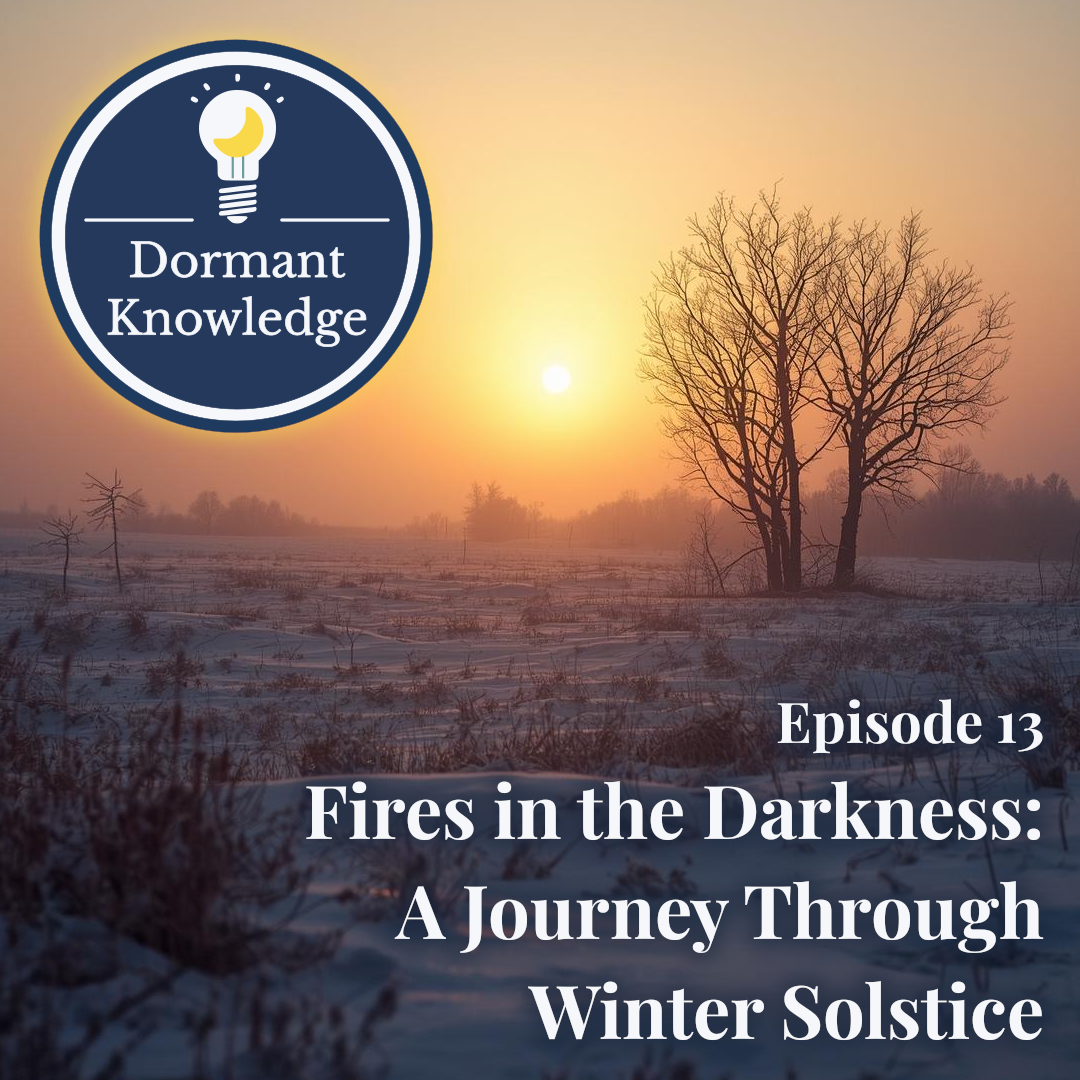
Episode 13: Fires in the Darkness: A Journey Through Winter Solstice | Dormant Knowledge Sleep Podcast
In this peaceful episode of Dormant Knowledge, the educational sleep podcast for curious minds, Deb uncovers the fascinating ways humans have marked the longest night of the year.
Host: Deb
Duration: ~50 minutes
Release Date: December 16, 2024
Episode Topics: Winter Solstice, Ancient Astronomy, Cultural Celebrations, Yule, Saturnalia, Newgrange, Stonehenge
Episode Summary
Journey through humanity's oldest celebration as we explore winter solstice traditions from cultures around the world. In this peaceful episode of Dormant Knowledge, the educational sleep podcast for curious minds, Deb uncovers the fascinating ways humans have marked the longest night of the year—from 5,000-year-old passage tombs engineered to capture the solstice sunrise to raucous Roman festivals where social hierarchies dissolved for a week of feasting and celebration.
Discover the astronomical precision of Newgrange in Ireland, where ancient builders created a passage tomb that illuminates for exactly 17 minutes on winter solstice morning. Explore the evidence of massive midwinter feasts at Stonehenge dating back 4,500 years. Learn how Germanic Yule traditions—evergreen decorations, Yule logs, and festive gatherings—evolved into many modern Christmas customs most people don't realize have pagan origins.
Travel to ancient Persia for Yalda Night, where families read poetry and eat pomegranates through the darkness. Experience Chinese Dongzhi, when families reunite to prepare and share tangyuan dumplings symbolizing togetherness. Visit Japan for Toji celebrations with yuzu-scented ritual baths promising good health through winter. And witness Roman Saturnalia, that week of revelry when masters served slaves and the normal social order turned delightfully upside down.
This episode explores why vastly different cultures across millennia developed strikingly similar responses to this astronomical turning point: lighting fires against the darkness, decorating with evergreens that promise life endures, feasting together to strengthen community bonds, and creating rituals around hope and renewal. Perfect for anyone who wants to learn something fascinating while gently drifting off to sleep.
What You'll Learn
• Discover the precise astronomical mechanics of the winter solstice and why it meant life or death for ancient peoples who depended on understanding the sun's return
• Explore how ancient cultures tracked the solstice without modern instruments, using landscape markers and monumental architecture aligned with incredible precision
• Learn about Newgrange, the 5,000-year-old Irish passage tomb that captures the solstice sunrise for exactly 17 minutes in its inner chamber
• Understand how Stonehenge's alignment and archaeological evidence of massive midwinter feasts reveal the importance of solstice celebrations 4,500 years ago
• Trace the origins of Christmas traditions—decorated evergreen trees, Yule logs, gift exchanges, and festive meals—back to ancient Germanic Yule celebrations
• Experience the upside-down world of Roman Saturnalia, where social roles reversed, gambling was encouraged, and the festival honored Saturn, god of agriculture and plenty
• Journey to Persia for Yalda Night, the celebration of the longest night with poetry readings, pomegranates, and watermelons symbolizing the cycle of life
• Discover Chinese Dongzhi festival traditions, where families gather to make tangyuan dumplings and the eating of these sweet rice balls marks the official beginning of aging one year
• Explore Japanese Toji customs, including ritual baths scented with yuzu citrus believed to ward off colds and bring good fortune through winter
• Understand why humans across vastly different cultures developed remarkably similar responses to the solstice: fire, evergreens, feasting, and rituals of light conquering darkness
Episode Transcript
[Soft ambient music fades in]
Deb: Welcome to Dormant Knowledge. I'm your host, Deb, and this is the podcast where you'll learn something fascinating while gently drifting off to sleep. Our goal is simple: to share interesting stories and ideas in a way that's engaging enough to capture your attention, but delivered at a pace that helps your mind relax and unwind. Whether you make it to the end or drift away somewhere in the middle, you'll hopefully absorb some knowledge along the way.
With your continued support, we can keep bringing you these cozy explorations of fascinating topics. You can find us at dormantknowledge.com or follow us on social media @dormantknowledge on Instagram and Facebook, or @drmnt_knowledge—that's d-r-m-n-t-underscore-knowledge—on X. And if you'd like to support the show, you can buy us a coffee at BuyMeACoffee.com @DormantKnowledgePodcast.
Tonight, we're exploring something that humans have celebrated for thousands of years across nearly every culture on Earth—the winter solstice. It's that moment when, well, the Northern Hemisphere experiences its longest night and shortest day of the year. But this astronomical event has meant so much more to people throughout history than just... a date on the calendar. It's been a time of hope, celebration, feasting, and ritual. So settle in, get comfortable, and let's begin our journey into the darkest night of the year and all the light that humans have brought to it.
[Music fades out]
So, um, let's start with the basics. What exactly is the winter solstice?
[Sound of shifting in chair]
Well, in the simplest terms, it's the moment when the North Pole is tilted furthest away from the sun. This happens around December 21st or 22nd each year—though the exact time varies. And when I say "moment," I mean it quite literally. The solstice isn't really a whole day—it's a specific point in time, down to the minute, when the sun reaches its southernmost point in the sky as viewed from the Northern Hemisphere.
Now, this happens because, you know, the Earth doesn't sit up straight as it orbits the sun. It's tilted at about 23.5 degrees. Imagine a spinning top that's leaning to one side—that's essentially what our planet is doing. And as we orbit around the sun over the course of a year, sometimes the Northern Hemisphere is tilted toward the sun—that gives us summer—and sometimes it's tilted away, which gives us winter.
At the winter solstice, we're at the maximum tilt away from the sun. The sun appears at its lowest point in the sky at noon, and we get the fewest hours of daylight. Here in the Northern Hemisphere, anyway. South of the equator, well, they're experiencing their summer solstice at the exact same moment, with their longest day of the year. Which is... kind of beautiful when you think about it. Half the world in its deepest darkness, the other half in its brightest light.
[Pause]
But here's what makes this so significant to human cultures throughout history: the very next day after the winter solstice, the days start getting longer again. Even if it's just by a minute or two at first. The sun begins its slow return. And for ancient peoples living without, you know, electric lights and heated homes and grocery stores full of food year-round, this astronomical turning point was... well, it was everything. It meant survival. It meant hope. It meant the promise that spring would eventually come, that crops would grow again, that the world wouldn't stay frozen and dark forever.
[Soft sound of papers]
Now, you might wonder how ancient peoples even knew when the solstice was happening. They didn't have calendars in the way we think of them, and certainly no astronomical charts or, um, smartphone apps telling them the exact minute of the solstice. But they were incredibly observant of the sky and the sun's movement.
Many ancient cultures tracked the solstice by watching where the sun rose and set on the horizon. You see, the sun doesn't rise in exactly the same spot every morning. Throughout the year, the point where it comes up on the eastern horizon shifts north and south. At the summer solstice, it rises at its northernmost point. At the winter solstice, its southernmost. Then it... reverses direction, essentially. The word "solstice" actually comes from Latin—sol meaning sun and sistere meaning to stand still—because for a few days around the solstice, the sun appears to rise and set in almost the same place before it begins its journey back.
Ancient peoples would mark these points. They'd use, you know, natural landmarks—a particular mountain peak, a distinctive tree, a notch in the landscape. Or they'd build their own markers. And some cultures went much, much further than that.
[Pause]
One of the most remarkable examples is Newgrange in Ireland. This is a passage tomb that's over 5,000 years old—built around 3200 BC, which makes it older than Stonehenge and older than the Egyptian pyramids at Giza. It's this massive circular mound of earth held up by a ring of standing stones, and there's a long passageway that leads to a central chamber.
But here's the extraordinary thing: above the entrance to this passage, there's a special opening called a roof box. And for most of the year, the interior of Newgrange is completely dark. But at dawn on the winter solstice—and for just a few days on either side of it—the rising sun shines directly through that roof box, and a beam of light travels down the 60-foot passage and illuminates the central chamber. It lasts for about 17 minutes. And this wasn't an accident. This was... carefully, deliberately engineered over 5,000 years ago by people who understood the sun's movement with remarkable precision.
[Yawns softly]
We don't know exactly what rituals took place at Newgrange during the solstice, but the fact that they went to such extraordinary effort tells us how important this moment was. Some researchers think it might have been connected to beliefs about the dead, about rebirth, about the sun's light reaching into the darkness as a symbol of... renewal, perhaps. But we're really just guessing.
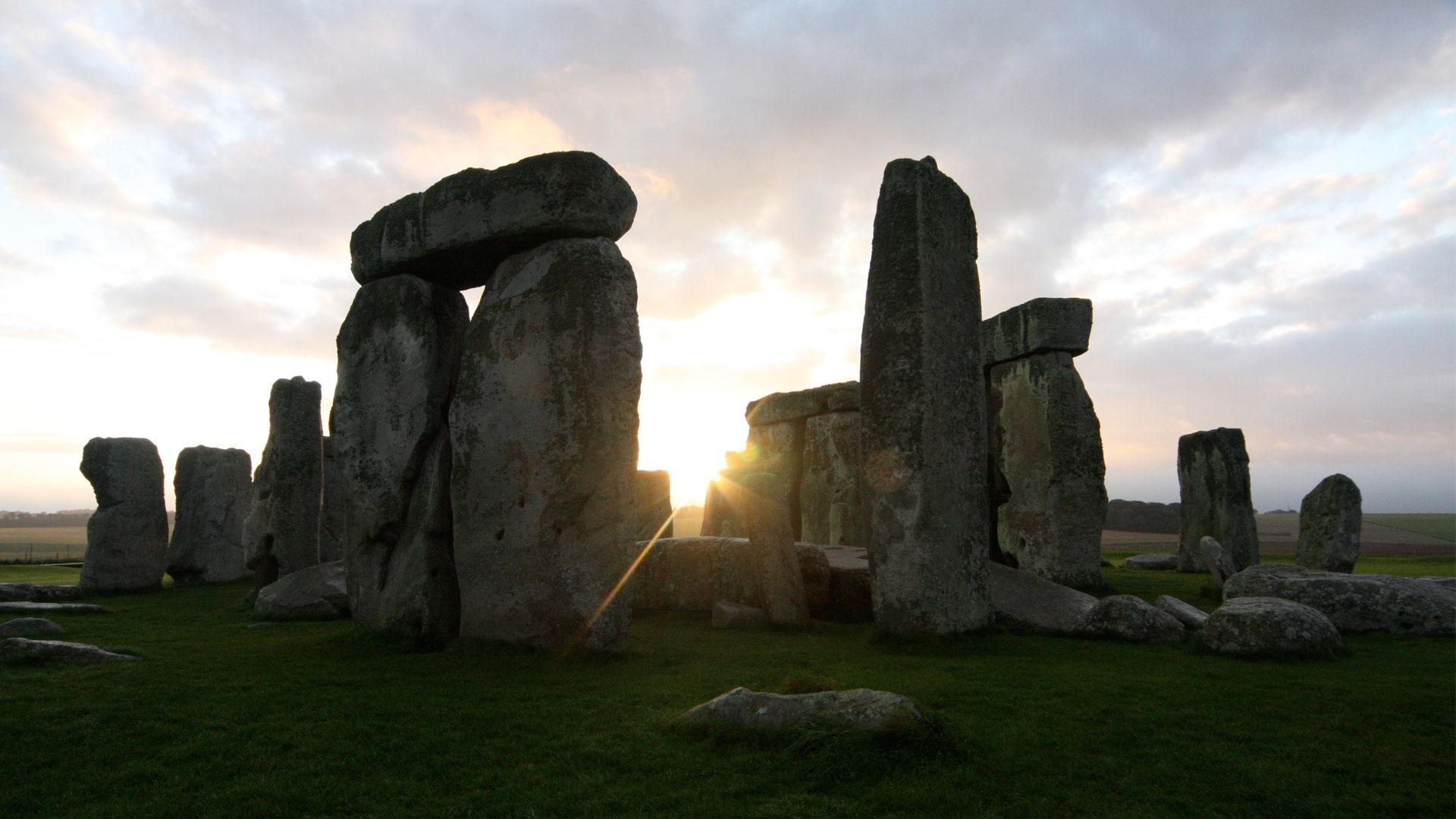
Stonehenge, of course, is another famous example. Most people know that Stonehenge aligns with the summer solstice sunrise—that's when thousands of people gather there today. But actually, um, many archaeologists think it was the winter solstice that was more significant to the people who built it. The avenue leading to Stonehenge aligns perfectly with the winter solstice sunset. And there's evidence of huge feasts happening around the winter solstice at nearby Durrington Walls, a settlement associated with Stonehenge. They've found, you know, animal bones showing that people were slaughtering pigs and cattle in midwinter and having these massive communal meals.
So even 4,500 years ago, the winter solstice meant gathering together, feasting, marking the moment when the light would begin to return.
[Sound of sipping water]
Now, let's talk about some specific cultural celebrations, starting in the lands that would become northern Europe.
The Germanic and Norse peoples celebrated something called Yule, which began on the winter solstice and lasted for about twelve days. This was a major festival in pre-Christian Scandinavia and other Germanic regions, and, well, many of its traditions have carried forward into modern Christmas celebrations, even though most people don't realize the connection.
One of the most famous Yule traditions was the Yule log. Now, we think of this today as... either a decorative log or, you know, that chocolate dessert shaped like a log. But originally, this was a very serious ritual. Families would select a large log—ideally from an oak or ash tree—and they'd bring it into their home with great ceremony. The log would be lit using a piece of the previous year's Yule log, which they'd carefully saved, and then it would burn in the hearth throughout the Yule celebration. The idea was that it needed to burn for the entire twelve days, or at least... as long as possible.
This wasn't just for warmth, though obviously that was part of it. The Yule log was symbolic. It represented the light and warmth of the sun, which was at its weakest point. Keeping that fire burning continuously was a way of, um, helping the sun through its darkest time, encouraging it to return. And there were all sorts of beliefs attached to it—the ashes from the Yule log were considered protective and were scattered in the fields or kept as charms against lightning and evil spirits.
[Pause]
Feasting was central to Yule as well. And this makes practical sense when you think about it. Midwinter was when livestock would be slaughtered—you couldn't keep all your animals alive through the winter, there wasn't enough feed. So late December became this time of... relative abundance, at least in terms of meat. It was one of the few times of year when people could feast. And feasting together, sharing that abundance with your community, that was important. It reinforced social bonds during the hardest season.
The Norse also had a tradition of making oaths during Yule—promises and resolutions for the coming year, made over the drinking horn. Sound familiar? Our New Year's resolutions might trace back to this practice.
Now, when Christianity spread through northern Europe, the church, quite cleverly, didn't try to eliminate these deeply rooted winter celebrations. Instead, they... absorbed them. Christmas was placed right in the middle of the traditional Yule season. Many Yule customs were rebranded as Christmas customs. The Yule log became a Christmas log. The feasting continued but became associated with Jesus's birth. The evergreen trees that had been part of Yule celebrations—because evergreens stay green even in the depths of winter, symbolizing the persistence of life—these became Christmas trees.
[Sound of shifting papers]
But let's go back even further and to a different part of the ancient world. Ancient Rome had Saturnalia, which was... well, it was wild by Roman standards.
Saturnalia began around December 17th and lasted for about a week, expanding over time. It was a festival honoring Saturn, the god of agriculture and time. And during Saturnalia, normal Roman social order was temporarily turned upside down.
Businesses and schools closed. People decorated their homes with greenery. They lit candles. They exchanged gifts—often small, inexpensive things like candles or figurines, but the gift-giving was important. During Saturnalia, slaves were freed from their duties. In some households, masters would actually serve meals to their slaves. People would wear casual clothes instead of togas. Gambling, which was usually illegal, was permitted. There was a general atmosphere of... freedom and equality that didn't exist at any other time of year.
[Pause]
There was even a tradition of selecting a "Lord of Misrule" or "King of Saturnalia"—often by lot—who would preside over the festivities and whose ridiculous commands had to be followed. It was all, you know, temporary and sanctioned chaos.
Now, this might seem strange—why would a highly stratified society like Rome allow such a complete reversal of social norms? But it served a function. It was a pressure valve. By allowing this brief period of role reversal and freedom, it actually... reinforced the social order the rest of the year. It was a controlled rebellion. And it gave everyone, even slaves, something to look forward to in the darkest part of winter.
The Romans knew exactly what they were doing when they scheduled this festival. They understood that midwinter was hard, that people needed a reason to celebrate, that brightness and generosity and communal joy could help people survive the darkest days.
And yes, when Christianity became the official religion of Rome, many Saturnalia customs were incorporated into Christmas celebrations. The gift-giving, the feasting, the greenery, the candles and lights—these all carried forward. Even the timing of Christmas, which, um, well... there's no biblical or historical evidence that Jesus was actually born on December 25th. That date was chosen, at least in part, because it fell right in the middle of existing pagan winter celebrations, including Saturnalia.
[Soft ambient music begins to fade in]
Deb: I'm going to take a quick break here. When we come back, we'll travel to East Asia and explore how the winter solstice has been celebrated in Chinese tradition for thousands of years, and then we'll look at some other fascinating solstice customs from around the world.
[Music plays for transition]
Deb: Welcome back to Dormant Knowledge...
[Music fades out]
So, um, let's shift our focus now to East Asia, where the winter solstice has been observed as a major festival for over 2,500 years.
In China, the winter solstice celebration is called Dongzhi, which literally means "winter's arrival" or "extreme of winter."
This festival dates back to the Han Dynasty, around 200 BCE, though the customs around it are likely much older. And for much of Chinese history, Dongzhi was as important as, or sometimes even more important than, the Lunar New Year.
[Sound of shifting in chair]
Now, the philosophical underpinning of Dongzhi is rooted in the concept of yin and yang—the idea of complementary opposites in balance. Winter, darkness, and cold are associated with yin energy. Summer, light, and warmth are yang. At the winter solstice, yin reaches its peak—the darkness is at its maximum. But it's also the turning point, the moment when yang begins to grow again. The light starts to return. So Dongzhi is both the deepest moment of yin and the first stirring of yang. It's about balance, transformation, and the inevitable cycling of the seasons.
One of the most important Dongzhi traditions involves food—specifically, tang yuan, which are these glutinous rice balls. They're usually filled with sweet paste made from, you know, sesame or peanuts or red beans, and they're served in a sweet soup. The balls are round, which symbolizes reunion and completeness. Families gather together for a meal featuring tang yuan, and there's a saying that you grow a year older after eating them during Dongzhi.
[Pause]
In northern China, especially, people traditionally eat dumplings during Dongzhi. There's a folk story behind this, actually. It's said that Zhang Zhongjing, a famous physician from around 200 AD, saw many poor people suffering from frostbite on their ears during a harsh winter.
So he created a medicinal soup with mutton, chili peppers, and other warming herbs, wrapped in dough and shaped to look like ears. He gave this to the people, and it warmed them and helped heal their frostbite. This was supposedly served around the winter solstice, and the tradition of eating dumplings at Dongzhi commemorates his kindness.
Whether or not that story is historically accurate, it reflects something important—the association of Dongzhi with family care, with warming foods, with looking after one another during the coldest time of year.
Dongzhi is also traditionally a time for families to visit ancestral graves and make offerings. There's a respect for the past, for lineage, that's woven into the celebration. It's about honoring where you came from while marking the point when the year begins to turn toward spring and renewal.
These traditions spread throughout East Asia. In Taiwan, in Korea, in Japan—each culture has its own variations on solstice customs, but many share that same emphasis on family gathering, on warming foods, on marking the astronomical turning point.
[Sound of sipping water]
Now let's travel to the Americas, because of course, indigenous peoples in North and South America also developed sophisticated understandings of the solstice and their own rich traditions around it.
The Hopi people of the American Southwest have a ceremony called Soyal, which takes place around the winter solstice.
This is a complex ritual that lasts for twenty days, though the most important ceremonies happen around the solstice itself.
Soyal is focused on preparing for the coming year. The Hopi believe that at the winter solstice, the sun is symbolically reborn. During Soyal, prayer sticks are created—these are carefully crafted wooden sticks decorated with feathers and other materials. Each prayer stick represents a prayer for health, rain, good crops, harmony. They're made with great care and intention, and then they're placed at shrines and sacred locations.
Kachinas—which are spirit beings in Hopi belief—are also central to Soyal. There are ceremonial dances, and kachina figures are given to children. These aren't toys exactly; they're teaching tools, ways of passing down spiritual knowledge and cultural values.
[Pause]
Soyal ceremonies aren't public—they're sacred and private to the Hopi community. But what we do know is that, like so many winter solstice traditions around the world, Soyal is about renewal, about prayer for the future, about the community coming together at a crucial turning point in the year. And remarkably, many of these traditions continue today. The Hopi still perform Soyal ceremonies, maintaining a connection to practices that are... hundreds, possibly thousands of years old.
Now, down in South America, the Inca had their own major sun festival called Inti Raymi.
But here's where things get interesting in terms of the Southern Hemisphere. Inti Raymi, which honored Inti, the sun god, was celebrated in June—if using our modern Gregorian calendar—during the Southern Hemisphere's winter solstice. Because of course, when it's December in the Northern Hemisphere and we're experiencing our winter solstice, the Southern Hemisphere is experiencing its summer solstice—the longest day, the peak of the sun's power.
[Yawns softly]
Inti Raymi, was celebrated at the June solstice with huge ceremonies in Cusco. There would be sacrifices, feasting, ritual dances—it was one of the most important events in the Inca calendar. The Spanish conquistadors suppressed these ceremonies, but in modern Peru, Inti Raymi has been revived as a major cultural celebration. Every June, there's a massive reenactment of the ancient ceremony at Sacsayhuamán, the fortress above Cusco.
Thousands of people participate, and it's become a powerful symbol of indigenous identity and cultural pride.
So the cultural meanings can be quite different. In the Northern Hemisphere, the winter solstice is about the darkest day and the promise of returning light. In the Southern Hemisphere, December is summer—it's a time of abundance, of long days, of warmth. Their winter solstice, their darkest day, comes in June.
[Pause]
Let's travel now to Persia—modern-day Iran—and talk about Yalda Night, or Shab-e Yalda.
Yalda is celebrated on the winter solstice, and it's one of the oldest Persian festivals, with roots going back to ancient Zoroastrianism, possibly 5,000 years or more. "Yalda" means birth, and in this context, it refers to the birth of Mithra, an ancient sun deity. It's the celebration of light triumphing over darkness.
The traditional way to celebrate Yalda is to gather with family and stay up all night—or at least late into the night. You're symbolically helping the sun through the longest night, keeping vigil until the light returns. And there's feasting, of course.
[Sound of papers shuffling]
The traditional foods for Yalda are really specific and symbolic. Watermelon and pomegranates are central. Now, you might think—watermelon in December? But remember, this is a festival that originated in a warm climate, and preserved fruits were used. The red color of both watermelon and pomegranates is significant—it represents the glow of dawn, of life, of the sun. There are also nuts and dried fruits, which represent... abundance and the hope for prosperity in the coming year.
But one of the most beautiful Yalda traditions is the reading of poetry, especially the works of Hafez, the beloved 14th-century Persian poet. There's a tradition of bibliomancy—you make a wish, then open Hafez's Divan, his collected poems, to a random page, and the poem you land on is read as a prediction or guidance for your future. It's treated partly seriously, partly playfully, but it adds this, um, this layer of meaning and reflection to the celebration.
Yalda is still widely celebrated in Iran and by Persian communities around the world. It's a time for family, for storytelling, for maintaining cultural connections across generations.
[Soft ambient music begins to fade in]
Deb: I'm going to take another short break here. When we come back, we'll look at some of the common threads that run through all these diverse solstice celebrations, and we'll think about what the winter solstice means in our modern world.
[Music plays for transition]
Deb: That music was making me a little sleepy... If you're still with us, then welcome back to Dormant Knowledge...
[Music fades out]
So we've traveled across the world and across thousands of years, looking at different winter solstice traditions. And if you've been listening—or, you know, half-listening as you drift off—you might have noticed some striking similarities.
[Pause]
Almost every culture we've discussed has some tradition involving light. The Yule log, the candles of Saturnalia, the vigil of Yalda, the ceremonial fires of Soyal—light is central. And this makes intuitive sense, right? When you're experiencing the longest night, the darkest day, the weakest sun... of course you're going to respond by creating light. Fire and candles become powerful symbols of hope, of resilience, of life persisting even in darkness.
Evergreen plants show up again and again too. Holly, ivy, mistletoe, pine boughs, fir trees—these plants that stay green even when everything else appears dead or dormant. They're symbols of enduring life, of nature's promise that death isn't permanent, that spring will return. Romans decorated with greenery during Saturnalia. Germanic peoples brought evergreen boughs indoors during Yule. The tradition continues today in Christmas wreaths and trees, though most people don't think about the ancient symbolism anymore.
[Sound of shifting]
Feasting is another universal element. And again, this makes practical sense. Midwinter was when animals were slaughtered—you couldn't feed them all through the winter. So there was meat available that wouldn't keep much longer anyway. Better to feast together, to share what you had, to strengthen community bonds. The Chinese tang yuan, the Roman Saturnalia banquets, the Norse Yule feasts, the Hopi ceremonial meals—food and eating together are central to nearly every solstice tradition.
And there's something else too—a theme of reversal or renewal. The Roman Saturnalia with its role reversals, the Chinese focus on the transition from yin to yang, the birth symbolism in Yalda, the Hopi prayers for the coming year—there's this sense of the old year ending and the new beginning, of transformation, of the world turning.
The winter solstice is a threshold. It's the point of deepest darkness, yes, but it's also the moment when the light begins to return. It's the ending that contains the beginning. And humans have always been drawn to marking thresholds, to ritualizing moments of transition. Birth, death, marriage, coming of age—we create ceremonies around these turning points. The winter solstice is the Earth's turning point, and we've responded by creating some of our most elaborate and enduring celebrations around it.
[Pause]
Now, there's something interesting to consider about why humans might be, um, almost programmed to respond this way to the winter solstice.
For most of human history, we lived much more directly connected to the rhythms of nature than we do today. The changing seasons weren't just pleasant variations—they were life-or-death matters. Would there be enough food stored to last until spring? Would the cold be survivable? Would the sun really return, or might it continue to weaken until the world froze in permanent darkness?
Of course, they knew from experience that the sun would return—they'd seen it happen every year of their lives. But there's something deep in human psychology that responds to this moment. The turning of the year, the return of the light... it gives us hope. It reinforces our belief in cycles, in renewal, in the possibility of new beginnings. Even though we know intellectually that the seasons will continue their regular pattern, there's still something powerful about marking this moment, about celebrating together, about creating light in the darkness.
[Yawns softly]
And celebration itself—gathering with others, feasting, singing, staying up through the night, exchanging gifts—these activities strengthen social bonds. They create shared memories and shared meaning. For communities that needed to cooperate to survive the harsh winter, these festivals weren't frivolous. They were essential. They reminded people that they were part of something larger than themselves, that they would face the difficult months ahead together.
[Sound of sipping water]
So what about the modern world? The winter solstice still happens, of course—the Earth's tilt hasn't changed. But many people in industrialized societies don't pay much attention to it anymore. We have electric lights, so darkness isn't the challenge it once was. We have grocery stores stocked year-round, central heating, weather forecasts on our phones. The winter solstice is just another day for most people, barely noticed.
And yet... many of the traditions persist, even if divorced from their original context. Christmas, Hanukkah, Kwanzaa—these December celebrations aren't exactly solstice festivals, but they occur around the same time, and they carry some of the same themes. Light in darkness—the Christmas tree lights, the Hanukkah menorah, the Kwanzaa kinara. Gathering with family. Feasting. Gift-giving. Evergreen decorations. These aren't accidents.
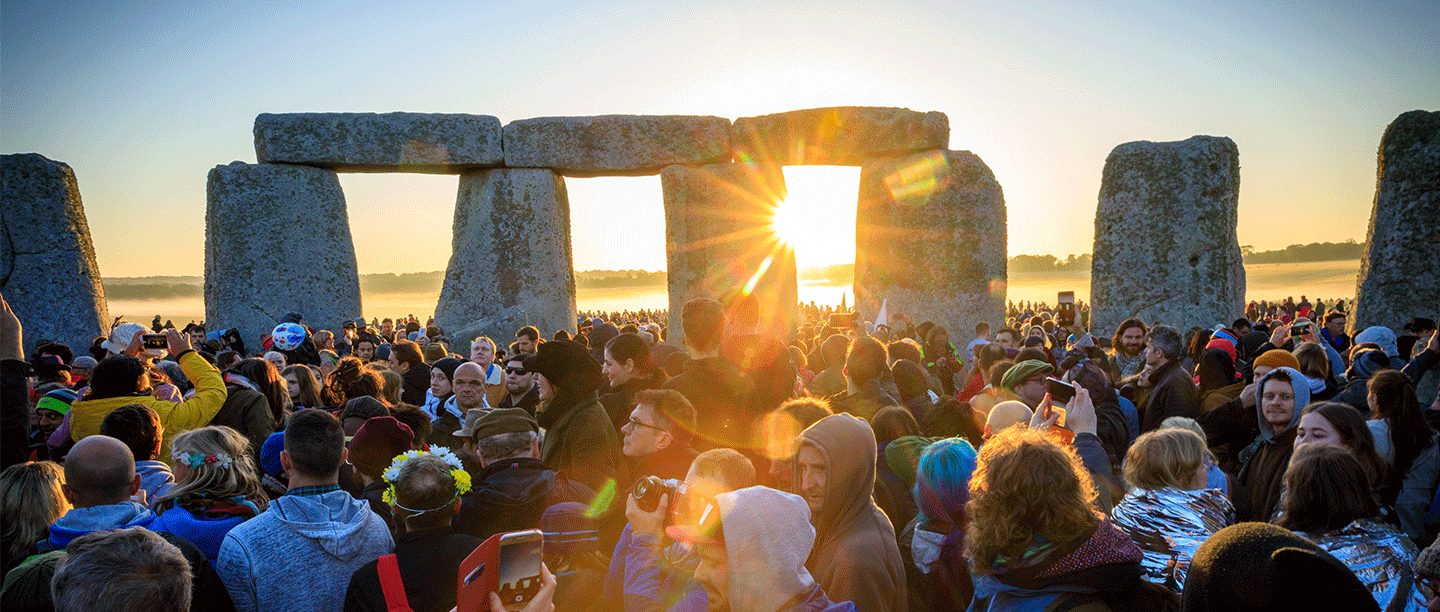
There's also been a revival of interest in explicitly solstice-centered celebrations. Modern pagan and neo-pagan groups celebrate Yule as part of their yearly cycle of festivals. At Stonehenge, thousands of people gather every year for the winter solstice—mostly modern druids and pagans, but also just people who are drawn to mark this ancient moment in an ancient place. The English Heritage, which manages Stonehenge, now opens it specifically for solstice celebrations, recognizing the ongoing importance of this connection.
[Pause]
And there's something happening in secular culture too—a growing awareness of the natural cycles we've become disconnected from. People are interested in marking the equinoxes and solstices again, not necessarily as religious observances, but as a way to feel more connected to the Earth, to the seasons, to something larger than the daily routine of modern life.
There's a hunger, I think, for rituals that root us in time—not just clock time or calendar time, but deep time, cyclical time, the kind of time that our ancestors lived by. The winter solstice offers that. It's been meaningful to humans for thousands of years. It's bigger than any one culture or religion. It's a fundamental astronomical event that every human who's ever lived has experienced.
[Sound of papers]
Now, before we wrap up, let's address a couple of interesting misconceptions and facts about the solstice.
First, about Christmas falling on December 25th. There's often confusion about whether this was chosen to coincide with the winter solstice. And the answer is... sort of, but not exactly. The winter solstice typically falls on December 21st or 22nd. December 25th is a few days later. But in the old Julian calendar, before calendar reforms, the solstice did fall closer to December 25th. And more importantly, the Romans celebrated the "birthday of the unconquered sun"—Dies Natalis Solis Invicti—on December 25th. This was a festival honoring Sol Invictus, the unconquered sun god, and it was closely tied to the solstice symbolism of the sun's rebirth, its triumph over darkness.
When Christianity was establishing itself in the Roman world, December 25th was chosen as the date to celebrate Jesus's birth, and while we can't know all the reasons with certainty, it seems clear that the existing winter celebrations played a role. By placing Christmas at this time, the church was... working with the cultural grain rather than against it. People were already inclined to celebrate around the solstice. Christmas could build on those existing impulses.
[Pause]
Another interesting thing: the word "solstice" itself, as I mentioned earlier, comes from Latin—sol for sun and sistere meaning to stand still. And it does seem like the sun "stands still" for a few days around the solstice. If you were to mark where the sun rises each morning, you'd see it shifting position day by day throughout the year—north in summer, south in winter. But right around the solstice, that movement almost stops. The sun rises in nearly the same place for several days before it starts its return journey. Ancient peoples would have noticed this—the sun reaching its extreme point, pausing, then reversing direction. It's an observable phenomenon even without any instruments.
And one more thing—the difference between meteorological winter and astronomical winter. Meteorologists define winter as December, January, and February in the Northern Hemisphere, because these are typically the coldest months. But astronomical winter begins at the winter solstice and ends at the spring equinox. So we're often already three weeks into meteorological winter when the astronomical winter begins. This can cause some confusion about when winter "officially" starts. The answer depends on whether you're asking an astronomer or a meteorologist.
[Soft ambient music begins to fade in]
So we've traveled through time and across the world tonight, exploring how humans have marked the winter solstice—this moment when darkness reaches its peak and light begins its slow return. From the ancient tomb at Newgrange to modern celebrations at Stonehenge, from Roman Saturnalia to Chinese Dongzhi, from Germanic Yule to Persian Yalda, we've seen how diverse cultures developed strikingly similar responses to this astronomical event.
Light in darkness. Evergreens that promise life endures. Feasts that bring communities together. Rituals that mark transformation and renewal. These themes echo across millennia and across continents because they speak to something fundamental in the human experience.
We've become somewhat disconnected from these natural rhythms in the modern world, with our artificial lights and climate-controlled environments. But the solstice still happens. The Earth still tilts. The darkest night still arrives, and the light still begins to return. And something in us still responds to that turning point, even if we don't quite remember why we string lights on trees or why we feel drawn to gather with the people we love when the year grows dark and cold.
Perhaps it's worth pausing, even in our busy modern lives, to mark this moment—to notice the darkness, to celebrate the light, to reflect on cycles and renewal, to connect with traditions that are far older than any of us.
Thank you for listening to Dormant Knowledge. If you're still awake and hearing my voice, I appreciate your attention. But if you've drifted off to sleep somewhere along the way—which was partly the goal—then you won't hear me say this anyway. Either way, I hope some knowledge about the winter solstice and humanity's long relationship with the longest night has made its way into your consciousness, or perhaps your dreams.
Until next time, this is Deb wishing you restful nights and curious days.
[Music swells gently and fades out]
END OF EPISODE
Show Notes & Resources
Key Historical Sites & Monuments Mentioned
Newgrange (Ireland) Built around 3200 BCE in County Meath, Ireland, this passage tomb predates both Stonehenge and the Egyptian pyramids. The structure features a roof box above the entrance that allows sunlight to penetrate the passage and illuminate the inner chamber for approximately 17 minutes during the winter solstice sunrise. This astronomical alignment demonstrates the sophisticated understanding ancient peoples had of celestial movements. The site is part of the Brú na Bóinne UNESCO World Heritage Site.
Stonehenge (England) Constructed in phases beginning around 3000 BCE, this iconic megalithic monument aligns with both the summer and winter solstices. While the summer solstice sunrise is most famous, archaeological evidence suggests the winter solstice sunset alignment may have been more significant to the builders. Excavations at nearby Durrington Walls have revealed evidence of massive midwinter feasting, with animal bones showing slaughter patterns concentrated around the winter solstice period.
Durrington Walls (England) A Neolithic settlement located near Stonehenge that shows evidence of large-scale feasting and gathering around the winter solstice period, approximately 4,500 years ago. Archaeological analysis of animal bones indicates that pigs and cattle were brought from across Britain and slaughtered specifically for midwinter celebrations, suggesting the winter solstice was a time of major communal gathering.
Important Cultural Celebrations & Traditions
Yule (Germanic/Norse Traditions) An ancient winter festival celebrated by Germanic and Norse peoples beginning on the winter solstice and lasting approximately twelve days. Key traditions included:
- The Yule log: A large log burned throughout the festival, with remnants saved to kindle next year's fire
- Evergreen decorations: Holly, ivy, and other plants that remained green through winter symbolized enduring life
- Feasting and drinking: Community gatherings with special foods and mead
- The Wild Hunt: Folkloric belief that Odin led a ghostly procession across the winter sky Many modern Christmas traditions derive from these ancient Yule customs, including decorated evergreen trees, gift-giving, and festive meals.
Saturnalia (Ancient Rome) A week-long Roman festival honoring Saturn, god of agriculture and plenty, celebrated from approximately December 17-23. Distinctive features included:
- Social role reversal: Slaves were served meals by their masters and could speak freely
- Public feasting and gift-giving: Particularly small clay figurines (sigillaria) and candles
- Gambling permitted: Normally restricted, dice games were encouraged during Saturnalia
- Io Saturnalia!: The festival greeting still echoes in our understanding of Roman culture
- Pileus (liberty cap): A felt cap symbolizing freedom worn during the celebration
Yalda Night (Persian/Iranian Tradition) Celebrated on the winter solstice (longest night of the year), this ancient Persian festival marks the triumph of light over darkness. Traditional activities include:
- All-night gatherings: Families stay awake through the longest night
- Poetry reading: Especially the works of Hafez, the 14th-century Persian poet
- Symbolic foods: Pomegranates (representing life cycle), watermelons (symbolizing summer), nuts and dried fruits
- Divination: Opening Hafez's Divan randomly to read fortunes for the coming year The celebration predates Islam and connects to ancient Zoroastrian beliefs about the struggle between light and darkness.
Dongzhi Festival (Chinese Tradition) Observed on the winter solstice (around December 21-22), this festival emphasizes family reunion and marks an important turning point in the Chinese calendar. Key elements include:
- Tangyuan: Sweet rice ball dumplings served in soup, symbolizing family togetherness
- Family gatherings: One of the most important times for family reunion in Chinese culture
- Ancestral offerings: Honoring deceased family members
- Traditional belief: Eating tangyuan makes you one year older
- Origins: Festival dates back over 2,500 years to the Han Dynasty
Toji (Japanese Winter Solstice) Japanese winter solstice observances focus on health and purification rituals to prepare for winter. Traditional practices include:
- Yuzu baths: Bathing in water with whole yuzu citrus fruits, believed to prevent colds and bring good fortune
- Kabocha (winter squash): Eating pumpkin or winter squash for health and luck
- Ritual purification: The solstice as a time for cleansing and renewal
- Adzuki bean porridge: Sometimes eaten for its warming properties
Modern Celebrations & Connections
Contemporary Christmas Traditions with Solstice Origins:
- Decorated evergreen trees (from Yule traditions)
- Gift-giving (Saturnalia and Yule influences)
- Feasting and gathering (universal solstice tradition)
- Candles and lights (representing the return of light)
- Twelve Days of Christmas (echoing the twelve days of Yule)
- Yule log cake (bûche de Noël) directly referencing the burning Yule log
Modern Pagan and Neo-Pagan Celebrations: Many contemporary pagan traditions celebrate the winter solstice as Yule, one of the eight festivals in the Wheel of the Year. Celebrations often include:
- Lighting fires or candles to symbolize the return of the sun
- Decorating with evergreens, holly, and mistletoe
- Feasting and community gatherings
- Reflection on the past year and intentions for the coming one
Stonehenge Winter Solstice Gathering: English Heritage opens Stonehenge for winter solstice celebrations, with thousands gathering to watch the sunset alignment. Modern druids, pagans, and people simply drawn to mark this ancient moment participate in this contemporary revival of solstice observation at this prehistoric monument.
Astronomical & Scientific Context
The Winter Solstice Explained: The winter solstice occurs when Earth's North Pole is tilted furthest away from the sun, approximately 23.5 degrees. This results in:
- The shortest day and longest night of the year in the Northern Hemisphere
- The sun reaching its lowest point in the sky at noon
- The southernmost sunrise and sunset positions on the horizon
- The exact opposite occurring simultaneously in the Southern Hemisphere (their summer solstice)
Why "Solstice": The term comes from Latin: sol (sun) + sistere (to stand still). For several days around the solstice, the sun appears to rise and set in nearly the same position on the horizon before reversing its annual journey, giving the impression of "standing still."
Difference Between Meteorological and Astronomical Winter:
- Meteorological winter: December, January, February (based on temperature patterns)
- Astronomical winter: Begins at winter solstice, ends at spring equinox This explains why we're often three weeks into "meteorological winter" when astronomical winter officially begins.
The Psychology of Solstice Celebrations
Why do humans across vastly different cultures develop similar solstice traditions? Several factors contribute:
Survival Imperative: For pre-industrial peoples, understanding the sun's movements was essential for survival. The solstice marked the promise that spring would return, crops would grow again, and the worst of winter would eventually pass.
Social Bonding: Winter celebrations strengthen community ties precisely when cooperation is most needed for survival. Feasting, gift-giving, and shared rituals create social cohesion that helps communities endure harsh months together.
Psychological Need for Hope: The symbolism of light returning from darkness, of life persisting through death, speaks to fundamental human needs for hope and renewal. Even knowing intellectually that seasons follow predictable patterns, there's something psychologically powerful about marking the turning point.
Connection to Natural Rhythms: In our modern, artificially-lit world, we've become disconnected from natural cycles. The growing interest in marking solstices and equinoxes reflects a hunger to reconnect with these ancient rhythms and feel part of something larger than daily routine.
Further Learning
Books
"The Winter Solstice: The Sacred Traditions of Christmas" by John Matthews A comprehensive exploration of winter solstice traditions across cultures and their evolution into modern Christmas celebrations. Matthews traces the deep roots of midwinter festivals and explains how ancient customs persist in contemporary practice.
 Follow
(paid link)
"Stations of the Sun: A History of the Ritual Year in Britain" by Ronald Hutton An authoritative academic work examining the history of seasonal celebrations in Britain, including extensive coverage of winter solstice traditions, Yule customs, and their transformation over centuries. Meticulously researched and considered the definitive source on British seasonal festivals.
 Follow
(paid link)
Documentaries & Videos
"Newgrange: The Megalithic Passage Tomb" (Various documentaries) Several documentaries explore this remarkable structure, including footage of the winter solstice illumination. Search for "Newgrange winter solstice" to find videos showing the light entering the passage tomb.
"Secrets of Stonehenge" (PBS Nova) Explores the latest archaeological discoveries about Stonehenge, including evidence of winter solstice feasting and the monument's astronomical alignments.

Online Resources
English Heritage - Stonehenge Winter Solstice Official information about winter solstice celebrations at Stonehenge, including how to attend the public opening. Website: www.english-heritage.org.uk

UNESCO World Heritage - Brú na Bóinne (Newgrange) Comprehensive information about Newgrange and the surrounding megalithic monuments. Website: whc.unesco.org
https://whc.unesco.org/en/list/659/
EarthSky - Winter Solstice Information Annual articles explaining the astronomical aspects of the winter solstice, including exact times and viewing information. Website: earthsky.org
 Deborah Byrd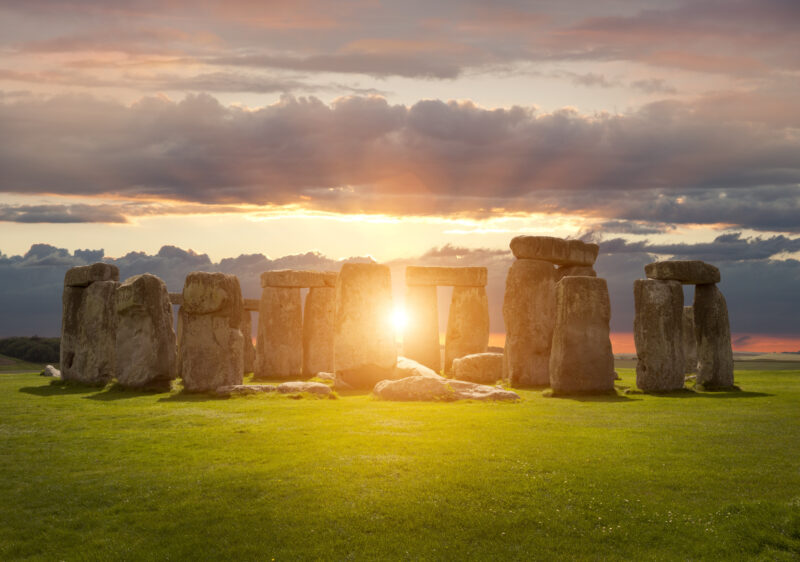
TimeandDate.com - Winter Solstice Calculator Calculate the exact time of the winter solstice for any location and year, with explanations of the astronomical mechanics.
 Konstantin Bikos
Academic Sources
"The Archaeology of Seasonal Festivals" - Various Journal Articles Academic journals like Antiquity, Journal of Archaeological Science, and World Archaeology regularly publish research on ancient seasonal celebrations and astronomical alignments in prehistoric monuments.
"Ancient Astronomy and Ceremonial Landscapes" - Archaeological Studies Research examining how ancient cultures used landscape features and built structures to track celestial events, with particular focus on solstice alignments.
Related Episodes
- Episode 1: The History of Calculus - Explores another example of how ancient peoples developed sophisticated understanding through observation
 Ken
Ken
- Episode 2: Pluto's Discovery and Reclassification - Continues themes of astronomical observation and how we understand our place in the cosmos
 Ken
Ken
Episode Tags
#WinterSolstice #Yule #Saturnalia #AncientHistory #Astronomy #CulturalTraditions #Newgrange #Stonehenge #Dongzhi #YaldaNight #Toji #ChristmasOrigins #PaganTraditions #SleepPodcast #EducationalContent #HistoricalCelebrations #AncientAstronomy #SeasonalRituals #DormantKnowledge #WinterTraditions #CulturalAnthropology
Dormant Knowledge is the educational sleep podcast for curious minds. Each episode explores fascinating but obscure topics delivered in a gentle, conversational style designed to help you learn while relaxing into sleep.
Listen on all podcast platforms: dormantknowledge.com
Follow us: @dormantknowledge (Instagram/Facebook) | @drmnt_knowledge (X)
Support the show: BuyMeACoffee.com/DormantKnowledgePodcast
This post contains Amazon affiliate links. As an Amazon Associate, Dormant Knowledge earns from qualifying purchases made through these links at no additional cost to you. We only recommend books and resources that are relevant to the episode content and genuinely valuable for further learning. Your support through these links helps us continue creating educational sleep content. Thank you!